
Table of Content
- ”Vibe Coding an App Until I Make $1,000,000”: Cool trend or new-age hustle porn?
- Wait, what? “vibe coding” in public?
- The BridgeMind effect
- Why this format hooks devs
- What you actually learn watching this stuff
- The community “vibe coder” ecosystem
- The dark pattern: it’s not (just) about the app
- Using vibe coding as fuel, not copium
- Should you start your own “$1M vibe coding” stream?
”Vibe Coding an App Until I Make $1,000,000”: Cool trend or new-age hustle porn?
Wait, what? “vibe coding” in public?
“Vibe coding” in public is basically live coding with a YouTube thumbnail that screams “I am going to become rich in front of you, in 4K.”
You open YouTube or Twitch, and there’s yet another stream titled something like “Day 178 – Vibe Coding an App Until I Make $1,000,000.”
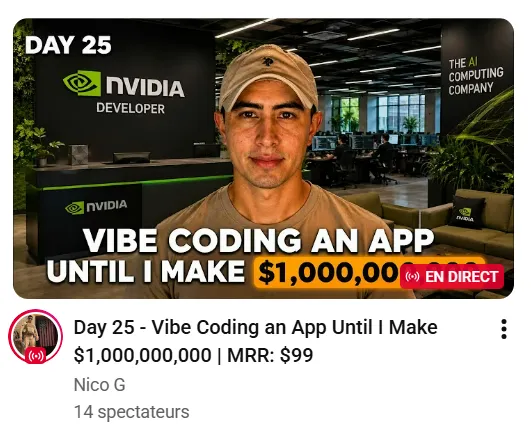
The format is simple:
-
One dev founder.
-
One app, usually SaaS with some AI buzz.
-
A massive long-term goal: make one million in ARR or revenue.
-
A lot of hours on stream where they code, fix bugs, talk to chat, and sometimes do pushups when someone hits a button.
It’s the Twitch version of those “I built an app that makes $400K/month, here’s how” or “Build a $1M app without code” posts that are now everywhere.
Except this time, you see the grind instead of the edited highlight reel.
The BridgeMind effect
The most visible example right now is BridgeMind, with daily “Vibe Coding an App Until I Make $1,000,000” streams on YouTube and Twitch.
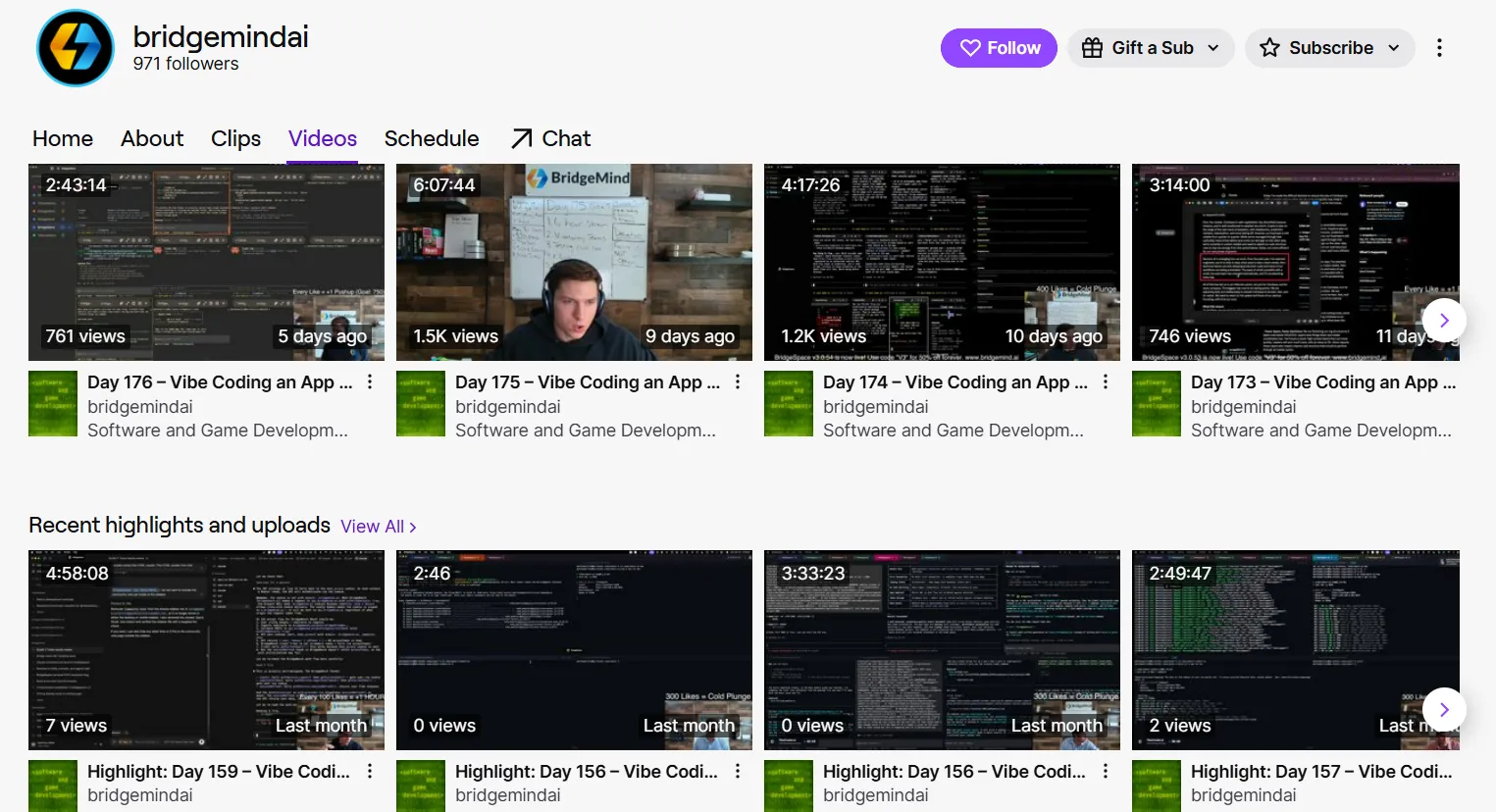
The dev is building a stack of AI tools: an AI IDE (BridgeCode), an automated clipping/transcription pipeline (View Creator), and a whole “vibe coding” academy around it.
Each stream is literally numbered like an anime episode: Day 160, Day 171, Day 177, Day 178, and so on, often with the current ARR proudly in the title.
You can see the progression: at Day 160, the title shows ARR around 74k, and by the mid-170s the streams mention ARR in the ~178k–191k range.
The description isn’t shy either: “Welcome to the raw, behind-the-scenes journey to $1,000,000,” plus links to the app, Twitch, Discord, etc.
Some streams are announced as “12-Hour Vibe Sprint” marathons, focused on bug squashing and scaling the architecture to handle growing MRR.
So yeah, this is not just “I’m coding a to-do app for fun.”
It’s a serialized startup reality show with ARR as the scoreboard.
Why this format hooks devs
If you’re a busy dev with no time, it’s easy to roll your eyes… and then realize you’ve been watching for 40 minutes.
There are reasons this stuff works:
-
It compresses the founder journey into digestible episodes. You don’t need to read a 40-page “how I built a SaaS” blog; you just drop into Day 171 and see the current mess in real time.
-
It makes the goal feel concrete. “Make $1,000,000” is vague; “I’m at 189,168 ARR and trying to push that number” hits the dopamine center much harder.
-
It weaponizes parasocial energy. Chat isn’t just watching; people give feedback, suggest features, ask pricing questions, and cheer every ARR milestone.
You’re not just seeing code.
You see marketing experiments, product decisions, dead ends, weird bugs, and the founder changing direction live when something doesn’t work.
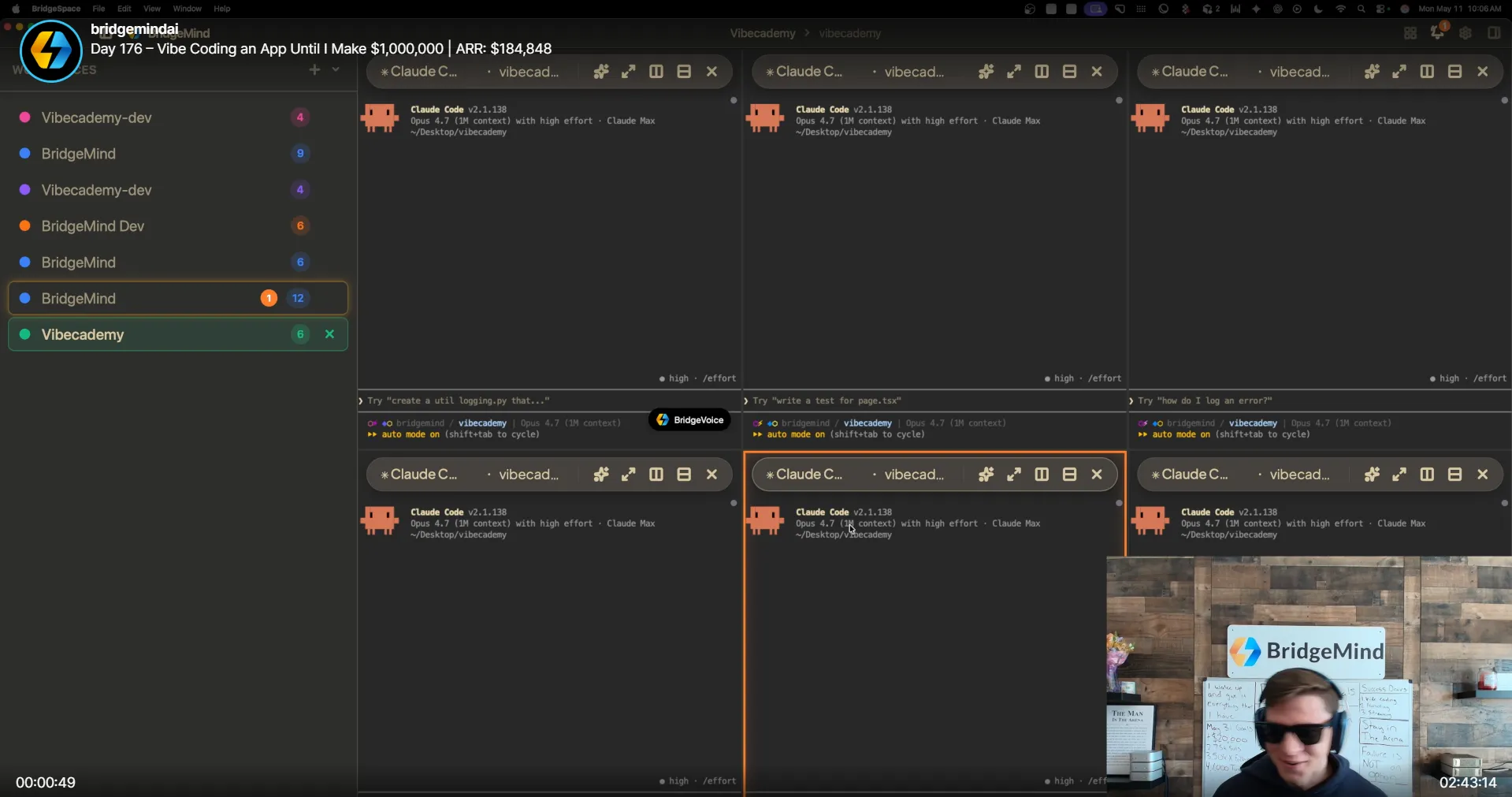
For devs stuck in corporate Jira hell, watching someone ship their own thing every day is both inspiring and slightly infuriating.
It’s “build in public” turned into an ongoing TV show.
What you actually learn watching this stuff
Surprisingly, it’s not just entertainment.
If you pay attention, there’s a lot of signal hidden under the memes and background lo-fi beats.
Examples of things you see on streams like BridgeMind’s:
-
How to stitch together AI tools into something actually sellable (AI IDE, clipping pipelines, etc.).
-
How they use their own tools (like View Creator) to mass-clip their content and feed the growth loop.
-
How product-led growth looks in real time: building features that help drive signups, adding small growth loops, experimenting with giveaways.
It’s not a clean tutorial.
It’s more like pair-programming with a slightly overcaffeinated founder who thinks aloud about architecture, marketing, pricing, and community moves as they go.
You also learn the most underrated part:
They just show up every day.
Day 122, 154, 160, 171, 175, 177, 178… a ridiculous streak of public, traceable effort.
The community “vibe coder” ecosystem
BridgeMind is just the most visible brand around this exact “vibe coding until $1,000,000” phrasing, but the broader vibe is everywhere.
Reddit’s /r/SaaS is already full of people complaining that every time I open YouTube, someone is already making $1M with ‘vibe coding.’
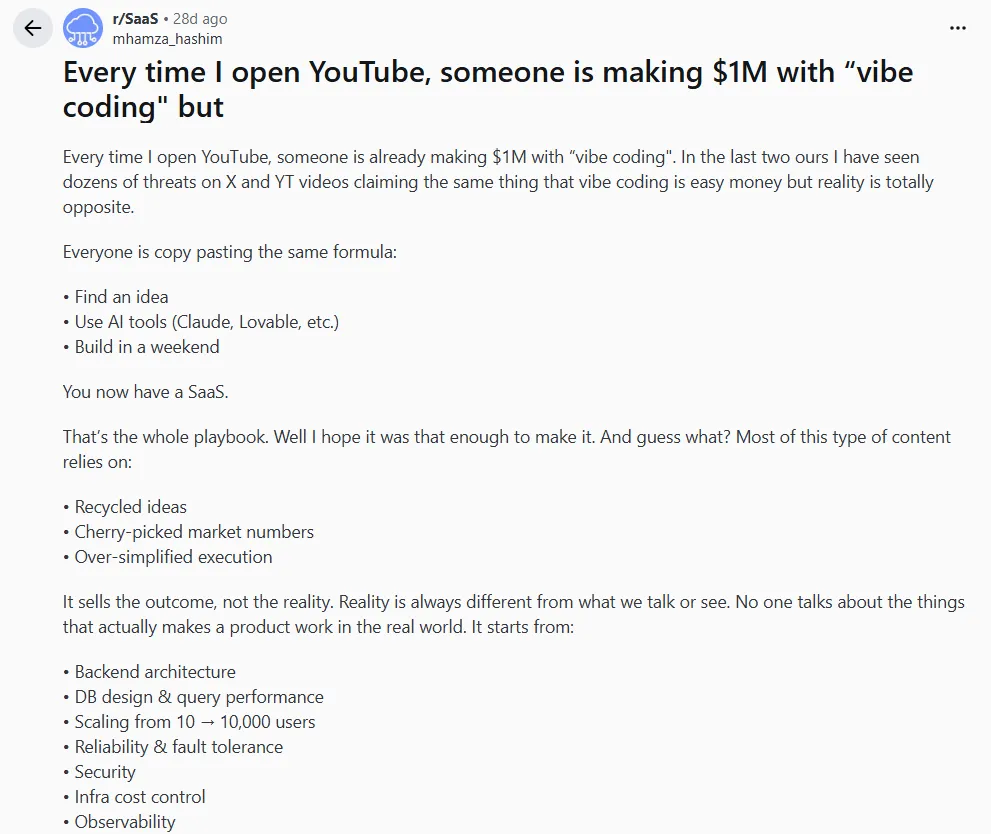
Around that, you see:
-
Dev-influencers streaming themselves building SaaS with Claude, Lovable, etc., over a weekend and calling it a new startup.
-
No-code creators promising “how I built a million-dollar app without writing code.”
-
Motivational content like “I made $1M in 12 months, just ask ChatGPT to be your CEO,” with a neat 1,000 × 1,000 pricing formula.
The “vibe coder” persona is now a content archetype: hoodie, mic, dark theme, and a grand business target floated on top.
The community forms around chats, Discords, and comment sections where everyone is “building something” and sharing MRR screenshots.
For lonely devs or indie hackers, this acts like a virtual coworking space with mild cult energy.
You hang out, work on your own project in another tab, and occasionally glance at someone else suffering through their bugs.
The dark pattern: it’s not (just) about the app
Of course, this is the internet.
The dream is pure; the monetization is… less pure.
People on /r/SaaS have started pointing out the obvious: many of these “build to $1M” creators make a big chunk of their income not from the app, but from content, courses, and communities about the app.
Some comments go further and say that only a handful of vibe-coded SaaS products become actual solid businesses; the rest monetize the dream via “how to” products.
That same Reddit thread also breaks down everything these streams rarely talk about:
-
Real backend architecture.
-
Database performance and scaling from 10 to 10,000 users.
-
Reliability, observability, infrastructure cost control, security, etc.
Basically, the boring parts you’d get roasted for if they failed in a serious B2B context.
One commenter explains how, in real B2B deals, support guarantees, uptime expectations, and contracts matter more than the vibe of the product demo.
So if you only watch vibe coding content, it’s easy to think SaaS is:
-
Idea.
-
Prompt AI.
-
Nice UI.
-
Thumbnail with “I hit $1M.”
Reality is more like:
-
Six months debugging billing edge cases.
-
Someone’s CSV import killed your database.
-
Pager going off at 3 a.m. because some region fell over.
-
Then, maybe, a blog post about your journey.
Using vibe coding as fuel, not copium
If you’re going to consume this stuff anyway, you can actually turn it into something useful instead of pure background noise.
A few ways to make it work for you:
-
Treat ARR numbers as context, not goals. Someone streaming Day 178 with ~190k ARR is standing on months of work, experiments, and failures you don’t see.
-
Notice the decisions, not just the code. Watch how they prioritize features, how they react when something flops, what they cut, what they never ship.
-
Steal workflows, not products. How they use AI, how they structure their repos, how they ship quickly while still moving toward something coherent.
-
Mute the “million” part if it paralyzes you. The $1,000,000 framing is marketing; your version can be “vibe coding until I get 10 paying customers.” (Less sexy, more achievable.)
In other words: use the streams like a living case study.
Take notes the way you’d take notes from a senior dev doing a long pairing session, except the senior dev is farming YouTube watch time while you lurk.
Should you start your own “$1M vibe coding” stream?
Short answer: maybe. But do it for the right reasons.
There are a few honest upsides to streaming your build:
-
You create public accountability; it’s harder to ghost your own project when there’s a Day 47 and people expecting Day 48.
-
You practice explaining your decisions, which will later help with onboarding, docs, and hiring.
-
You attract a small tribe of users and contributors way before “launch,” if you’re actually solving a problem and not just chasing thumbnails.
BridgeMind shows that, done right, this format can attract a real audience, grow ARR, and reinforce the product feedback loop at the same time.
You still need actual engineering, marketing, support, operations, and long-term execution – the stream doesn’t replace any of that; it just exposes it.
If you spin up your own version, consider dropping the fake timeline and just stream the real grind:
-
“Vibe coding until my infra bill stops hurting.”
-
“Vibe coding until one stranger pays.”
-
“Vibe coding until I replace my rent.”
Less epic, sure.
But much closer to how those “$1,000,000” stories actually start, long before the ARR number is big enough to fit in a YouTube title.