
RTX Spark + Surface Laptop Ultra: Nvidia just dropped a PC hand grenade
Table of Content
- So, what the hell is RTX Spark?
- Why devs should care (beyond the hype)
- Enter Surface Laptop Ultra: Microsoft’s “please don’t buy a MacBook Pro” machine
- The screen and hardware bits that matter
- Real-world benefits for devs
- Price: prepare your wallet (and maybe a kidney)
- Availability: when can you actually buy one?
- Who is this actually for?
- Should you care right now?
So, what the hell is RTX Spark?
Nvidia finally did what everyone suspected: it built its own Arm-based “all-in-one brain” for Windows laptops and tiny desktops, called RTX Spark.
Under the hood, it mixes a 20-core Grace CPU with a Blackwell RTX GPU sporting 6,144 CUDA cores and fifth-gen Tensor Cores. Everything shares up to 128 GB of unified memory, glued together with NVLink-C2C so CPU and GPU stop fighting over RAM like two interns over the good chair. Nvidia claims up to one petaflop of FP4 AI compute, which basically means it’s built to run huge models locally instead of begging some random cloud endpoint.
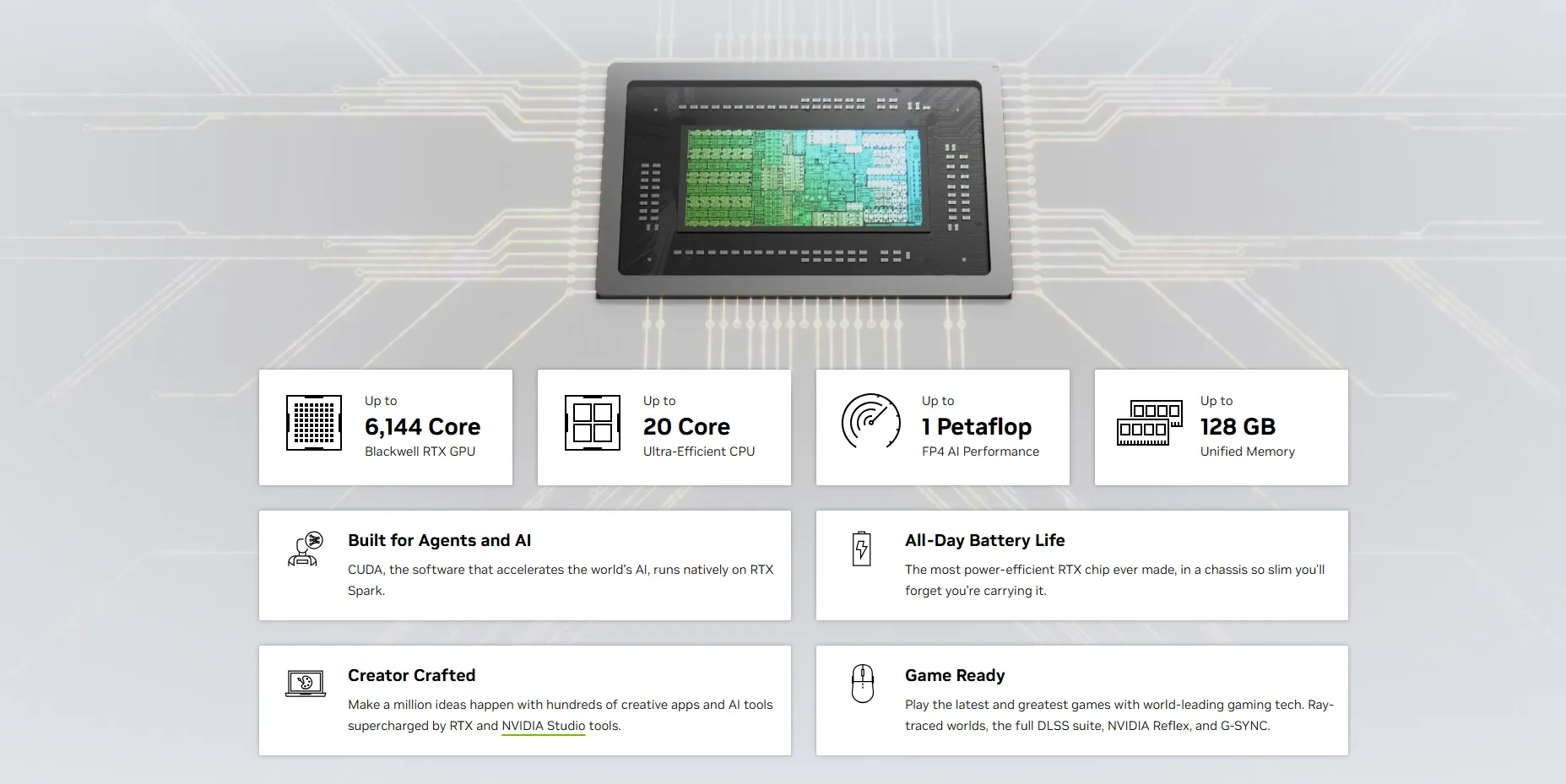
This thing targets Windows on Arm machines: slim laptops and compact desktops that still want real GPU horsepower, not the usual “AI ready” sticker slapped on a glorified tablet. Microsoft is tuning Windows specifically for it: unified memory handling, heterogeneous scheduling, power/thermal tweaks, plus the Prism emulator so your x86 apps don’t instantly die.
Why devs should care (beyond the hype)
CUDA runs natively on RTX Spark, so all the AI tooling and frameworks you already know don’t need to be sacrificed to the compatibility gods. Nvidia and Microsoft are pushing Spark laptops as local AI workstations that can run models up to around 120B parameters on-device thanks to the unified 128 GB memory pool. That means fine-tuning and serious inference locally instead of juggling colab tabs, spot instances, and “who killed the Jupyter server this time?”.
On the software side, Microsoft and Nvidia are lining up native Arm versions of the usual creative and technical suspects: Photoshop, Premiere, Blender, DaVinci Resolve, Cinema4D, MATLAB via Prism, and more. For gaming breaks “between builds,” they’re promising support for DirectX, OpenGL, Vulkan, plus anti-cheat-friendly titles like Fortnite running locally.
Enter Surface Laptop Ultra: Microsoft’s “please don’t buy a MacBook Pro” machine
One of the first machines to ship with RTX Spark is Microsoft’s new Surface Laptop Ultra. Microsoft is pitching it as its most powerful Surface laptop ever and very clearly as a direct answer to current-gen MacBook Pros. The positioning is simple: AI devs, creators, and power users who want a portable box that can actually chew models instead of just running VS Code and crying.
Inside, it’s basically RTX Spark in a premium chassis: same Arm-based Grace CPU, Blackwell GPU, unified LPDDR5X RAM up to 128 GB, and around 300 GB/s of memory bandwidth. The unified memory can be dynamically allocated between CPU and GPU, which is nice when your “small side project” model suddenly becomes a VRAM vampire.
The screen and hardware bits that matter
The Surface Laptop Ultra has a 15-inch PixelSense Ultra display with mini-LED, 2880 x 1920 resolution, and about 262 PPI. Microsoft says it hits up to 2,000 nits peak brightness in HDR, which is either great for color-critical work or perfect for burning your retinas at 3 a.m. while debugging shaders.
Ports are surprisingly sane for once: HDMI, USB-C, USB-A, SD card reader, and a headphone jack, all built-in. They also brag about the largest haptic touchpad ever on a Surface laptop, because apparently that’s the new “we’re serious about creators” checkbox. Weight stays under about 4.5 pounds, with Platinum and Nightfall color options, so you can choose between “corporate silver” and “dark mode IRL.”
Battery life is marketed as “all-day,” which in real dev terms probably means “fine until you start training a model and Chrome at the same time,” but we’ll see once reviews land.
Real-world benefits for devs
If you do AI, data, or heavy creative work, the big win is local capacity. With up to 1 PFLOP of AI compute and 128 GB unified RAM, Spark systems are pitched as capable of running and fine-tuning pretty big models entirely on your machine. That’s very interesting for pentesters, internal tools, or privacy-sensitive workloads where “just send it to the cloud” is a compliance nightmare.
Windows on RTX Spark is also part of the Copilot+ PC push, so you get local NPUs plus RTX GPU acceleration for “agents” that run directly on your box. Nvidia’s demos show personal agents doing code gen, asset generation, video editing, and gaming on the same machine without catching fire immediately.
For content creation, Nvidia claims these laptops can handle up to 12K 4:2:2 video editing and render scenes up to roughly 90 GB in size, thanks to the big unified memory pool. For devs who also touch Blender, Unreal, or video editing, that’s the difference between “okay” and “why is everything swapping?”.
Price: prepare your wallet (and maybe a kidney)
Official pricing? Yeah, about that.
Microsoft and Nvidia are both doing the classic “we’ll talk numbers closer to launch” dance for Surface Laptop Ultra and RTX Spark PCs in general.
Unofficially, sources talking to PCWorld and others suggest that RTX Spark laptops with the “base” N1 chip may start around 2,000 dollars, with the higher-end N1X models landing in the 2,500-2,900 dollar bracket. Analyst chatter even points to some premium configs pushing into the 3,000-4,000 dollar range, especially for machines with the full 128 GB memory and maxed-out Spark variants. Community speculation on the Surface Laptop Ultra specifically has people throwing around numbers up to 6,000 dollars for the absolute top-end config, though that’s purely guesswork for now.
So, translation:
- Don’t expect anything under 2,000 dollars if it has RTX Spark inside.
- High-end configs with 128 GB unified memory are likely “company budget” machines, not “I’ll just buy this for fun.”
In short: cool tech, premium pricing, classic early-adopter tax.
Availability: when can you actually buy one?
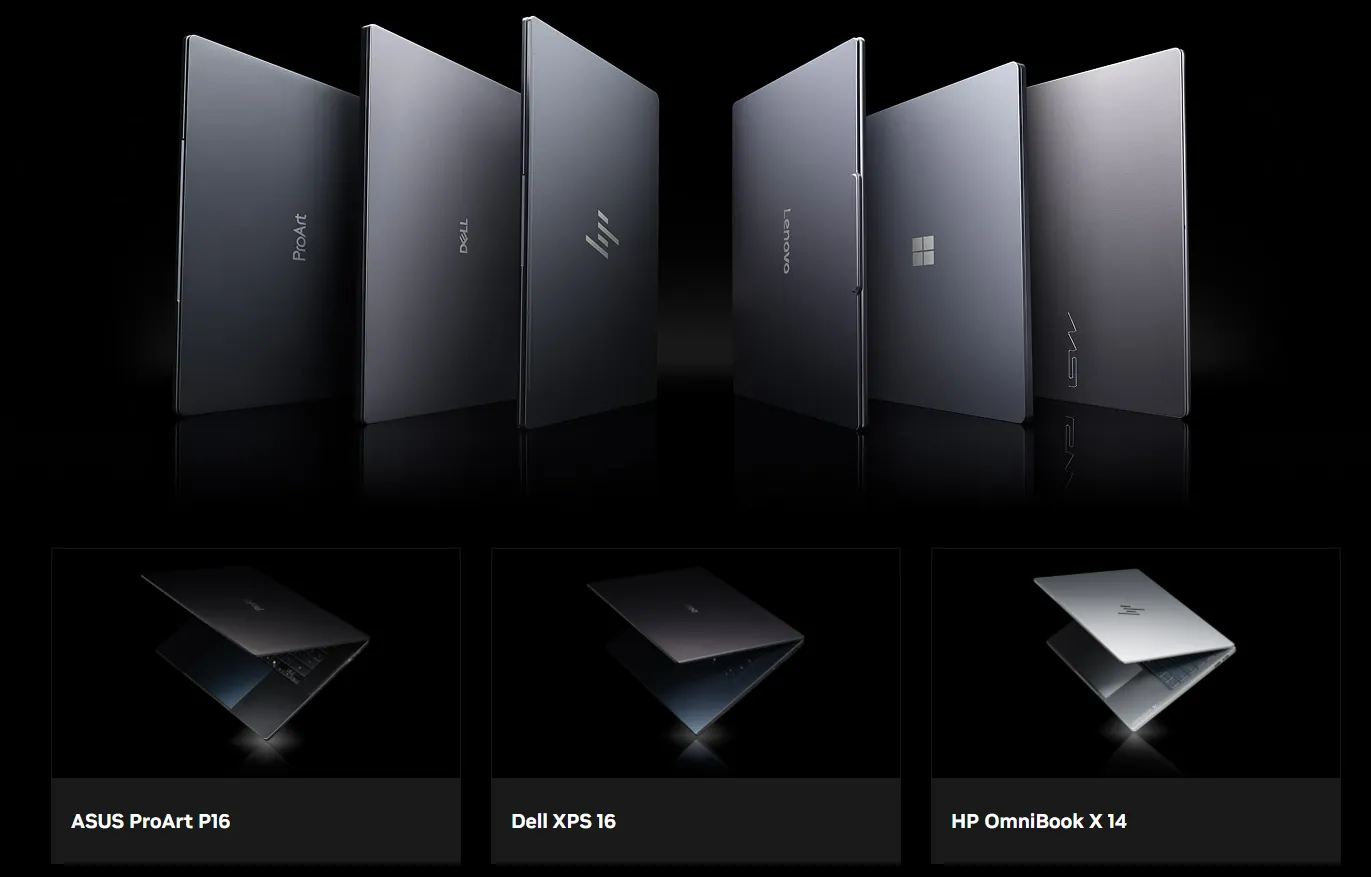
RTX Spark PCs in general are slated for a fall 2026 release window, with laptops and compact desktops coming from Asus, Dell, HP, Lenovo, Microsoft, MSI, and later Acer and Gigabyte. Nvidia is very clear that Spark systems are meant to be a whole new category of Windows AI PCs, not just one flashy devkit.
The Surface Laptop Ultra itself is “arriving later this year,” also targeting a fall timeframe, with pricing and exact dates coming closer to launch. So for now it’s basically: “Yes, it exists, no, you can’t throw money at it yet.”
Who is this actually for?
If you’re a regular web dev mostly living in the browser and SSH, this is probably massive overkill unless you really want bleeding-edge toys. If you’re doing AI research, heavy LLM work, rendering, or dev tooling around agents and local inference, Spark laptops start to look like a portable lab that doesn’t need a rack at home.
The Surface Laptop Ultra in particular looks tailored for:
- AI devs who want CUDA and big models on the go, but like nice screens and good build quality.
- Creators juggling video, 3D, and photo tools, who are tired of choosing between thin-and-silent and “actually powerful.”
- Windows-first shops that can’t or won’t switch to macOS but still want “MacBook-class” hardware for their teams.
For everyone else, Spark is still worth watching just because it’s Nvidia crashing into the PC CPU space with a very opinionated idea: PCs as local AI agent hubs, not just browsers with delusions of grandeur.
Should you care right now?
Short version: follow it, don’t impulse-buy (yet).
We know the architecture basics, the partners, the form factors, and the rough pricing tier, but we don’t have independent benchmarks, thermals, or real-world battery numbers. Windows on Arm also still has things to prove for dev workflows, especially around tooling, containers, and weird native dependencies.
If your work or side projects involve AI agents, LLMs, or GPU-heavy workloads and you were already budgeting for a high-end laptop, putting Spark and Surface Laptop Ultra on your radar makes sense. If you just wanted something to run Docker, SSH, and a browser, maybe let the early adopters do the bug-hunting and enjoy the memes while the prices settle.